
How Should I Back Up My Critical Data? A Small Business Guide
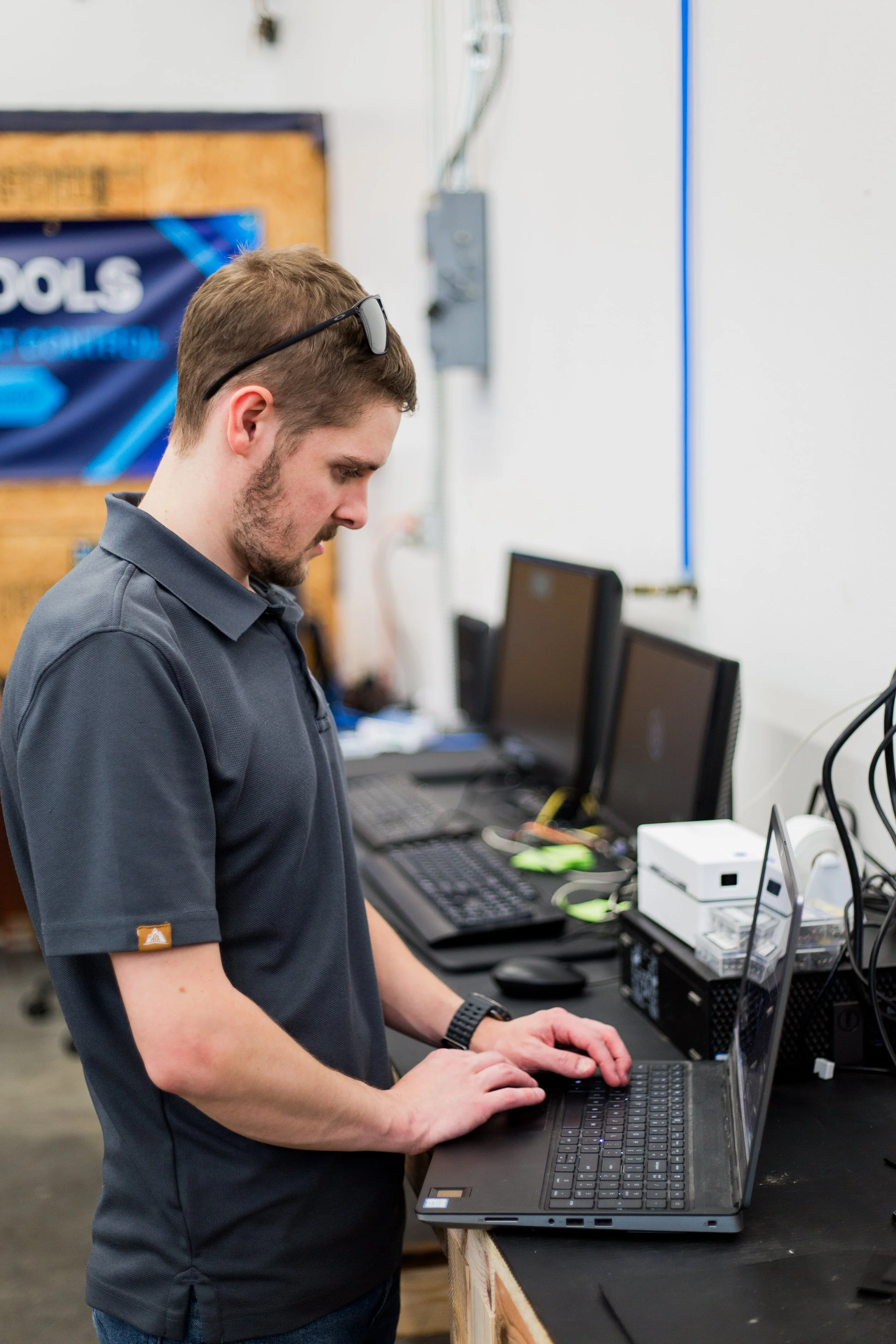
Justin fixing IT at our local Farmington office
If your business runs on a computer and today, almost every business does, a single hard drive failure, ransomware attack, or stolen laptop can put you out of operation for days. For businesses that kind of disruption isn't just inconvenient. It can mean missed appointments, lost client records, and real financial damage you may not recover from.
The good news: a solid backup strategy isn't complicated or expensive to get right. Here's what every small business owner should know.
Why "I'll Get to It Later" Is the Most Expensive IT Decision You'll Make
Most business owners know they should be backing up their data. Far fewer actually have a system in place that they've tested. The problem is that backup failures are invisible until the exact moment you need them — and by then, it's too late to fix.
Common causes of business data loss include:
Hardware failure — hard drives and servers wear out, often without warning
Ransomware and cyberattacks — increasingly common targets for small businesses, not just large corporations
Human error — accidental deletion, overwritten files, or a laptop left at a coffee shop
Natural events — fire, flood, or power surges affecting on-site equipment
Theft — a stolen laptop or desktop is a data loss event, not just a hardware loss
Any one of these can happen to a business of any size. The difference between a minor hiccup and a business-ending event usually comes down to whether a real backup existed — and whether it actually worked.
The 3-2-1 Backup Rule: The Standard Every Business Should Follow
IT professionals use a simple framework called the 3-2-1 rule, and it's a good starting point for any business:
3 copies of your data — the original, plus at least two backups
2 different types of storage media — for example, an external drive and a cloud backup, not two copies sitting on the same server
1 copy stored offsite — somewhere physically separate from your business, so a fire, flood, or theft at your location doesn't take out every copy at once
Any single storage method can fail. Spreading your data across multiple locations and formats means one bad event can't wipe out everything at once.
Cloud Backup vs. Local Backup: You Need Both
A common question we get from clients is whether cloud backup alone is enough. The honest answer is: cloud backup should be part of your strategy, but it shouldn't be the only part.
Local backup (external drives, on-site servers, network-attached storage)
Fast to restore from — important when you need data back immediately
No dependency on internet speed or an outside provider
Vulnerable to on-site disasters (fire, flood, theft) if it's the only copy
Cloud backup (offsite, provider-managed storage)
Protected from physical events at your location
Accessible from anywhere, useful if your office is temporarily unusable
Restoring large amounts of data can take longer, depending on your internet connection
Used together, they cover each other's weaknesses. This is exactly what the "2 different types of media" and "1 offsite copy" parts of the 3-2-1 rule are built around.
Automate It — Don't Rely on Someone Remembering
In the moment it is easy to say the phrase “I’ll remember that” or “I’ll do it later”. Manual backups fail for a predictable reason: someone eventually forgets, gets busy, or assumes someone else is handling it. The businesses that actually stay protected are the ones with automated, scheduled backups running in the background daily, or even continuously for critical systems with no human step required to trigger them.
If your current backup process depends on a specific employee remembering to plug in a drive or run a manual export, it's not a matter of if it fails, but when.
Test Your Backups — A Backup You Haven't Tested Is a Guess
This is the step almost every small business skips, and it's the one that matters most. A backup that has never been tested for restoration isn't a safety net — it's an assumption. Corrupted backup files, incomplete backup jobs, and misconfigured systems are common, and they're often invisible until the moment you desperately need to restore something.
At a minimum, businesses should periodically run a real test restoration pulling actual files or systems back from backup to confirm the process works end to end, not just that a backup job "completed" without errors.
A Note for Healthcare, Dental, and Other Regulated Businesses
If your business handles patient records or other protected health information, your backup strategy isn't just a best practice — it's a compliance requirement. HIPAA specifically requires covered entities to have a documented data backup and disaster recovery plan. That means encrypted backups, controlled access, and documentation showing your process meets the standard — not just "we back things up sometimes."
What a Solid Backup Plan Looks Like in Practice
Putting it all together, here's what we recommend for most small and medium-sized businesses:
Automated daily backups of all critical systems and files
At least one local backup for fast recovery
At least one offsite/cloud backup for disaster protection
Encryption on backups containing sensitive or regulated data
Scheduled test restorations — quarterly at minimum
A written recovery plan so your team knows exactly what to do if data is lost, rather than figuring it out during a crisis
Don't Wait for a Data Loss Event to Find Out Your Backup Doesn't Work
Data backup is one of those things that's easy to deprioritize right up until the moment you desperately need it. If you're not confident your current backup setup would actually get your business back up and running after a serious incident, now is the time to find out — not after something goes wrong.
ZiaTech provides managed IT support for small and medium-sized businesses throughout Farmington, Durango, and the Four Corners, including backup and disaster recovery services built around the standards above. If you'd like a free assessment of your current backup setup, contact us or call (505) 278-5858.